When I graduated from grad school and moved from the Midwest to the New York City area, I quickly discovered how challenging it was to find a small circle of committed friends. In a city like NYC it’s very easy to meet new people, but connecting on a deeper level is another ball game. People over 25-ish are much busier, have less time, and require more effort.
What I experienced is not unique. Many adults struggle to find new friends in their mid-to-late twenties and beyond. To make matters more complicated, social media and technology appear to have made Millennial and Gen Z adults, in particular, feel more disconnected and isolated than older generations. Meanwhile, a highly publicized “loneliness crisis” has been a global hot topic for at least the past decade. And the COVID-19 pandemic didn’t help, with reports of loneliness increasing since 2020.
So it’s not surprising that over the past few years a slew of mobile and web apps aimed at helping adults make friends have popped up around the internet—each promise to provide a solution to the above problems. While these friendship apps are all trying to solve the same issues, their approaches vary drastically!
These apps (and by “apps” I mean mobile or browser-based services) tend to come in one of a few forms:
- User-driven apps: These are mobile apps, like Bumble BFF, that try to mimic the dating app experience, letting users swipe left or right on profiles and take it upon themselves to reach out. They are often one-on-one connections, much like dates.
- Meetup apps: Meetup apps, like, well, Meetup, try to round up strangers, usually a limitless number of them, with similar interests. These in-person events function like networking or “meet-and-greets” where you’re never really sure who will show up or if you will ever see them again.
- Events-driven apps: These apps try to make things more personable by letting users host or plan small in-person events and invite strangers who might be interested. The idea is that the connection happens around these special activities, which are often one-off moments.
- Entertainment apps: These are “fun” applications that loosely define “friends,” allowing people from around the world to chat and interact in digital-only environments. People “meet” on these apps via video or text chat, or may play online games together. With these apps, meeting in person isn’t a priority.
- *Gender-specific friendship apps: Actually, these apps are kind of a sub-group of most of the other categories. They may be user-driven, meetup-driven, or events-driven, but are restricted to one gender (usually women, so far). In a world where lines can be blurred even when things are supposed to be strictly platonic, these apps try to ensure the people you are meeting don’t have ulterior motives, while also increasing gender-specific bonding.
Many of these friendship apps come and go. Some are backed by multi-million dollar companies, while others start as simple ideas by everyday individuals who recognized a need in their community.
I now fall in the latter camp.
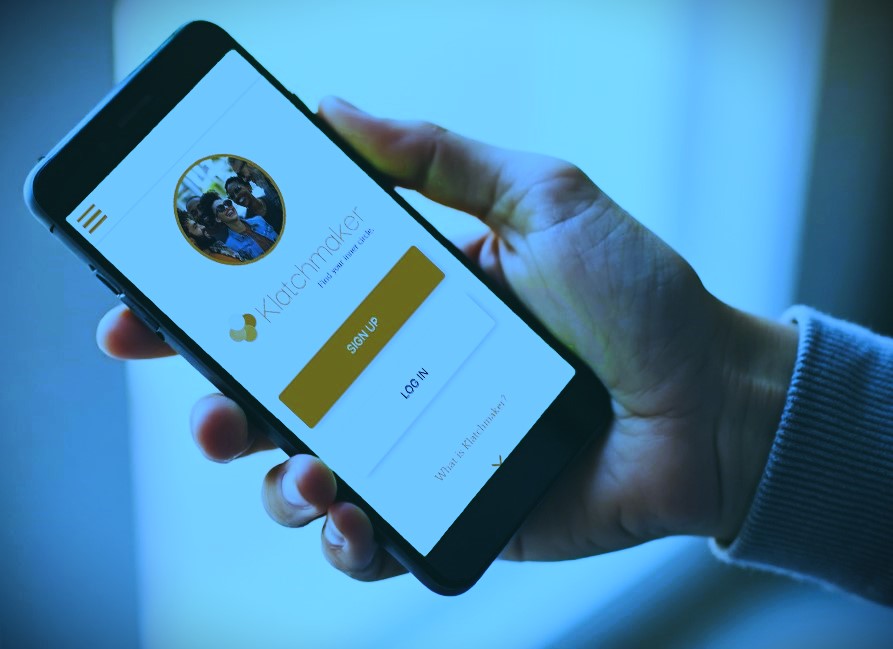
Building on more than 15 years of digital media experience, I created Klatchmaker, a website that matches adults with small groups of nearby friends. The inspiration came from my friend-making experiences as a young professional transplant in New York City. It was easy to meet people in NYC, but not so easy to build a core circle like the group of friends I had when I was in school.
At first, the goal was to build a solution to the “adult friendship problem” while also sharpening my backend development skills with Ruby Rails. Between 2020 and 2025, I chipped away at it off and on as a side project, until a career shift encouraged me to commit to finishing it and shipping it out.
In a way, this project is not just a response to the challenges of building friendship circles as an adult, but also a response to the existing tools that attempt to help. I designed Klatchmaker specifically to avoid some of the issues I found with other friendship apps.
Unlike other products, Klatchmaker isn’t user-driven or modeled after the swipey dating apps. Instead, it uses an algorithm I designed that does the searching and matching for users—like a friend-matchmaker. Unlike many other friendship apps, Klatchmaker’s algorithm isn’t simply matching people based on superficial similarities, such as what they like to do or which canned phrases they chose in a survey. As a journalist, I drew from my research skills to build a smarter algorithm rooted in the plethora of studies and data on what makes friendships and small groups work. In essence, this algorithm is using a more authentic definition of “compatibility”–one rooted in science and research, not just assumptions.
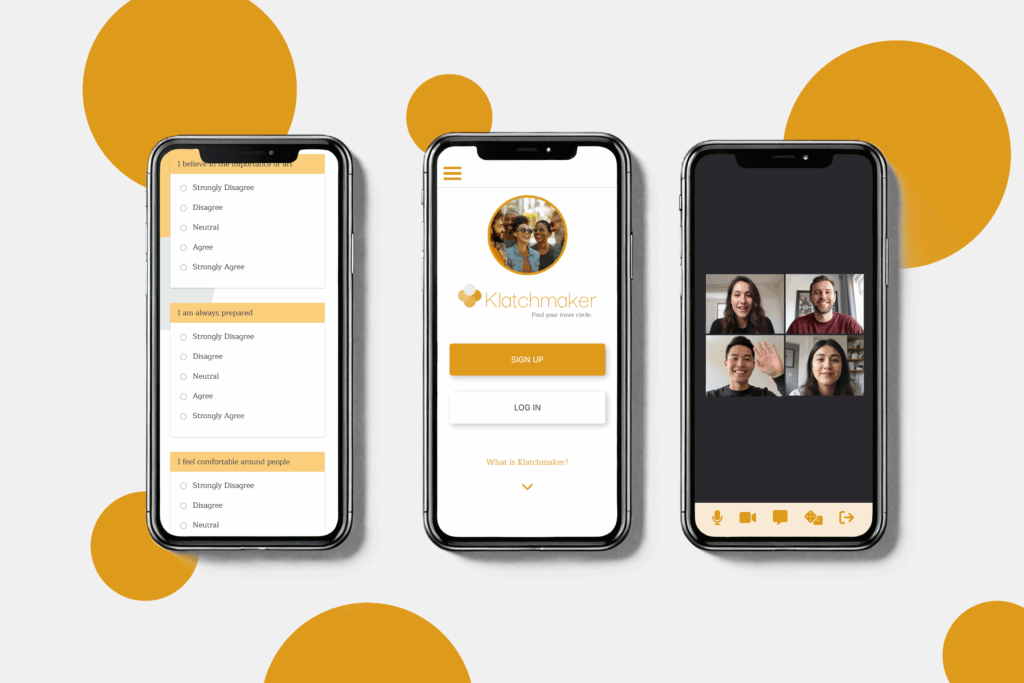
While many friendship apps allow users to meet in person for one event, I built Klatchmaker to be a friendship management tool, in which consistent meeting, with the same group, over time, is encouraged.
This framework comes directly from the “small groups” I experienced as a college student. Small groups are common in many Christian churches and organizations. They’re small Bible study groups in which church members can get to know other members on a more personal level. I met most of my college and grad school friends from these kinds of groups. Over the years, I notice that many of the people who meet in these spaces end up making lifelong bonds.
These groups appear to be so effective at building relationships I’m surprised they have not really caught on in the secular world. So even though Klatchmaker is not a religious organization or affiliated with any religious movement, group or church, the idea behind it is very much inspired by the small group concept: little groups of like-minded people who meet regularly and consistently, developing tight bonds.
My little side-project-turned-startup is unique in many ways, but, like many new products, building awareness for it is a major challenge. Most friendship apps out there seem to be struggling with this. Despite the popularity of people creating friendship apps, no one seems to have really found the perfect formula or the right backing to dominate the space. And promoting said apps in an increasingly saturated and jaded digital world, without a million-dollar marketing budget (whether via social media or through the press) is an uphill battle. Meanwhile, much like the early days of the dating apps, consumers are still trying to understand what to make of these apps amid the stigmas of loneliness and needing help finding friends as an adult.
So as innovators continue to experiment with new ways to bring people together, time will tell which of the many models will work best. My project attempts to add a completely new category to the current group of models out there. It’s not a user-driven, events-driven, or entertainment-driven app. It’s a compatibility-driven companion that does most of the work for users. They say you shouldn’t design for yourself, but Klatchmaker sort of breaks that rule. It is everything I felt I needed in a friendship app but found missing.